
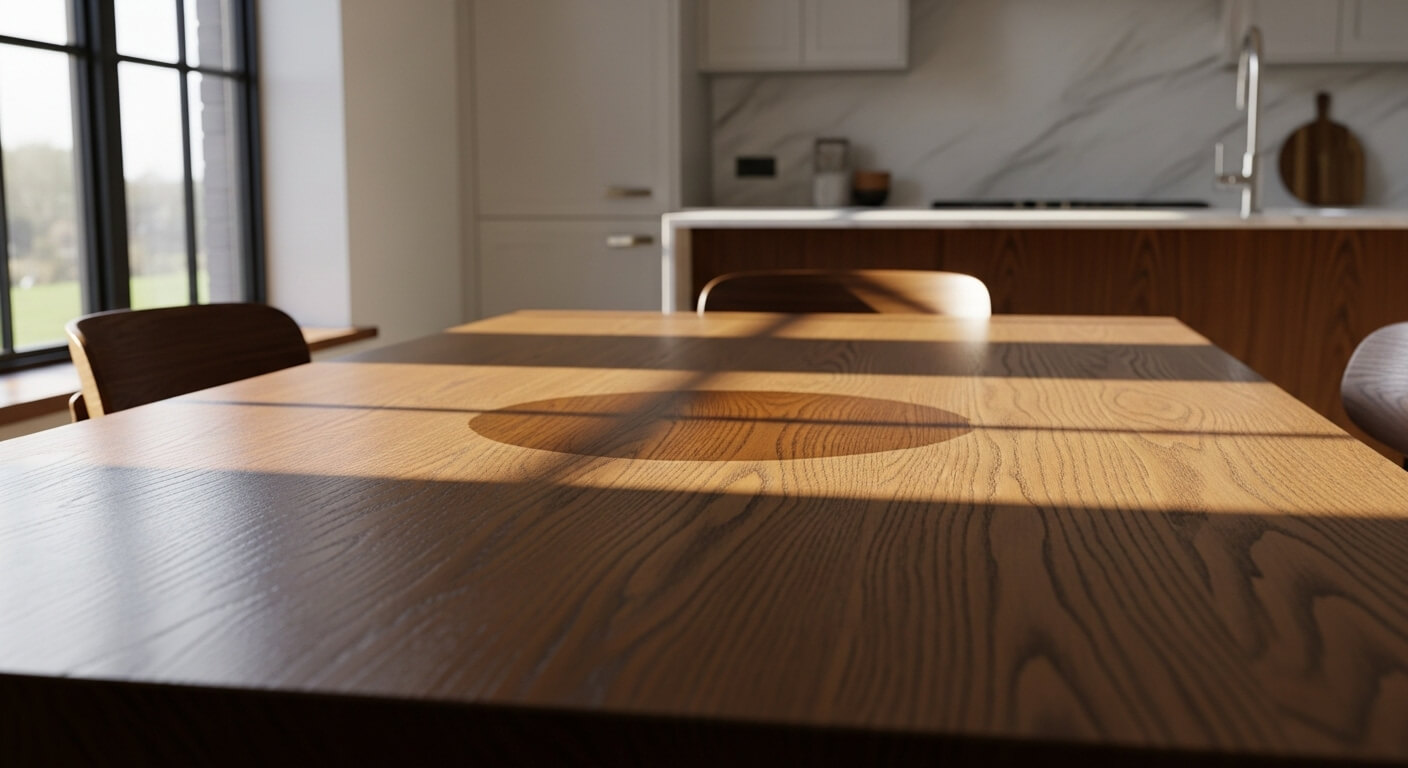
A beautiful wood table often serves as the heart of a home, a place for family dinners, game nights, and heartfelt conversations. But one careless moment—a sweaty glass or a hot mug placed directly on the surface—can leave behind a dreaded water stain. That milky white ring or dark, ominous spot can feel like a permanent blemish on your prized furniture. Fortunately, most water stains are not a death sentence for your table.
Fixing water damage on wood is often simpler than you might think. Whether you are dealing with a fresh, light-colored ring or a more stubborn dark stain, there are several effective methods using common household items. This guide will provide step-by-step instructions to restore your table’s beautiful finish. We will cover different techniques for various types of stains and share essential wood table care tips to prevent them from happening again.
Understanding Water Stains: White vs. Dark
Before you start any repair, it is crucial to identify the type of stain you have. The color of the mark tells you how deep the damage goes.
- White Water Stains: These are the most common type. A white or cloudy ring indicates that moisture is trapped in the top layer of the wood’s finish (like lacquer, shellac, or polyurethane), but it has not reached the wood itself. These are relatively easy to remove.
- Dark Water Stains: A dark brown or black stain is more serious. This means water has penetrated through the finish and soaked into the wood grain, often leading to mold or mildew. These stains require a more intensive approach for wood table water stain removal.
How to Remove White Water Stains from Wood
Always start with the gentlest method first. What works for one finish might not work for another, so test any method on a small, inconspicuous area of the table before tackling the stain.
Method 1: The Heat Method (Iron or Hair Dryer)
This technique works by gently warming the finish, allowing the trapped moisture to evaporate.
What You’ll Need:
- A clean, dry cotton cloth (like a t-shirt, no prints)
- A clothing iron or a hair dryer
Step-by-Step Instructions:
- Place a clean, dry cotton cloth over the white water stain. Ensure the cloth has no wrinkles.
- Set your iron to its lowest heat setting with the steam function turned OFF.
- Briefly press the warm iron onto the cloth over the stain for a few seconds.
- Lift the iron and the cloth to check your progress. The stain should start to fade.
- Repeat the process, applying heat in short bursts until the stain disappears. Be patient and avoid leaving the iron in one spot for too long, as excessive heat can damage the finish.
If using a hair dryer, set it to low heat and move it back and forth over the stain, keeping it a few inches from the surface until the mark vanishes.
Method 2: The Abrasive Paste Method (Baking Soda or Toothpaste)
A mild abrasive can gently buff out the moisture trapped in the finish.
What You’ll Need:
- Baking soda OR non-gel white toothpaste
- A soft cloth
- Water
Step-by-Step Instructions:
- Create a paste by mixing one part baking soda with one part water. If using toothpaste, use it directly.
- Apply a small amount of the paste to a soft, damp cloth.
- Gently rub the paste onto the water stain, moving with the direction of the wood grain.
- Apply only light pressure. You are trying to polish the finish, not scrub it off.
- After a minute or two, wipe the area clean with a separate damp cloth and dry it immediately with a clean, soft towel.
- Once dry, you can apply a bit of furniture polish to restore the luster.
Method 3: The Oil-Based Solution (Mayonnaise or Petroleum Jelly)
It might sound strange, but the oils in these products can displace the moisture in the finish and restore its appearance.
What You’ll Need:
- Mayonnaise (full-fat) or petroleum jelly
- A soft cloth
Step-by-Step Instructions:
- Dab a small amount of mayonnaise or petroleum jelly directly onto the white water stain.
- Let it sit for at least a few hours, or even overnight for stubborn stains. The oils will slowly work their way into the finish.
- Wipe the product away with a clean cloth.
- Clean the area with a damp cloth to remove any residue and buff dry.
How to Remove Dark Water Stains from Wood
Dark stains are more challenging because the damage is in the wood itself. This process often involves stripping the finish, treating the wood, and then refinishing the area.
Method 1: Using Oxalic Acid
Oxalic acid, often sold as “wood bleach,” is highly effective at removing dark water and rust stains from wood. Safety is paramount here—wear gloves, safety glasses, and work in a well-ventilated area.
What You’ll Need:
- Oxalic acid crystals
- Sandpaper (medium and fine grit)
- Protective gloves and eyewear
- A soft brush and cloths
- Water and white vinegar
- Matching wood stain and finish
Step-by-Step Instructions:
- Strip the Finish: You must first remove the existing finish over the stained area. Use sandpaper or a chemical stripper to sand down to the bare wood.
- Apply Wood Bleach: Mix the oxalic acid crystals with water according to the product’s directions to create a solution. Use a brush to apply the solution only to the dark-stained area of the wood.
- Let it Work: Allow the solution to dry completely. As it dries, you should see the dark stain begin to lighten and disappear. You may need to apply a second coat for very dark stains.
- Neutralize the Acid: Once the stain is gone, you must neutralize the bleach. Wipe the area with a cloth dampened with a 50/50 mixture of white vinegar and water. Then, wipe again with plain water.
- Refinish: Let the wood dry completely for at least 24 hours. Lightly sand the area with fine-grit sandpaper to ensure it’s smooth. Apply a matching wood stain and topcoat finish to blend the repair with the rest of the table.
Prevention: The Best Wood Table Care Tip
The easiest way to deal with water stains is to prevent them from happening in the first place.
- Use Coasters and Placemats: This is the simplest and most effective rule. Make coasters, placemats, and trivets easily accessible.
- Wipe Up Spills Immediately: Don’t let any liquid sit on the wood surface. Wipe it up right away with a soft, absorbent cloth.
- Maintain the Finish: A healthy topcoat is your best defense. Periodically polish your table with a high-quality furniture polish. If the finish is worn, consider applying a fresh coat of polyurethane or lacquer to reseal the surface.
Conclusion
Seeing a water stain on your favorite wood table can be disheartening, but it’s rarely a permanent problem. By correctly identifying the type of stain and choosing the right method, you can effectively remove the mark and restore your furniture. From a simple pass with a warm iron to a more involved treatment with wood bleach, the power to fix water damage on wood is within your reach.
Remember to be patient, always test your chosen method on a hidden spot first, and embrace the power of coasters to protect your table for the future. Have you successfully removed a water stain from wood? Share your story or any helpful tips in the comments below
Leave a Reply